The Day I Realized Formula Was Not the Enemy
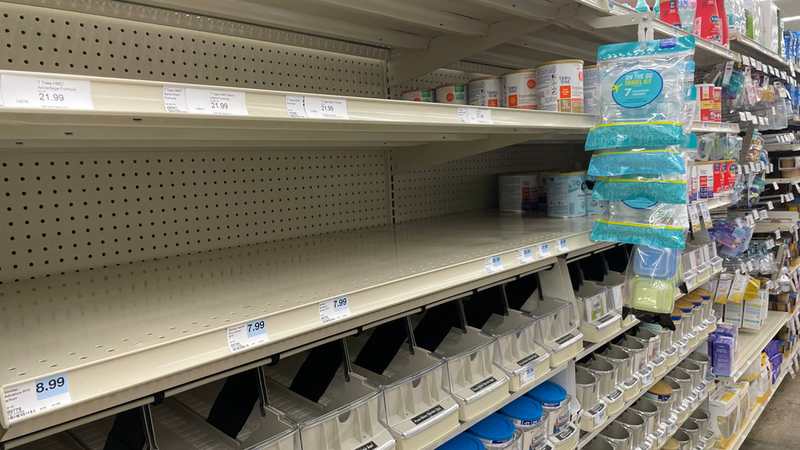
I was standing in the formula aisle at the Fred Meyer on Hawthorne, holding a can of hypoallergenic formula, and I was crying. Not the pretty kind. The ugly, shoulder-shaking, mascara-running kind. Lily was three weeks old. She was screaming in the car seat attached to the cart. A woman walked past me with her newborn in a wrap, breastfeeding while she comparison-shopped for organic baby food, and I felt like the floor had opened up beneath me.
I had failed.
At least, that is what I told myself. I am a Registered Dietitian. I spent three years in the NICU at OHSU helping premature babies thrive on specialized feeding protocols. I knew the science of lactation backward and forward. I had planned for a natural birth and exclusive breastfeeding, and I had gotten neither. Lily was born at 36 weeks via emergency C-section after my blood pressure spiked to 165 over 110. She was small. She was jaundiced. She was hungry.
And my milk? It was not enough.
I tried everything. The lactation consultants at Legacy Emanuel were wonderful. I pumped every two hours. I drank the teas. I ate the oatmeal. I took the supplements that taste like fermented grass. I spent $400 on a hospital-grade pump that sounded like a diesel engine. And still, Lily lost weight. She dropped from 5 pounds 8 ounces to 5 pounds 1 ounce by day five. Her pediatrician — Dr. Patel at the Portland Pediatric Group — looked me in the eye and said, "Emily, she needs calories. We need to supplement."
I heard the word "supplement" like it was a verdict. Like she had said "surrender."
I went home that night and sat on the kitchen floor with Mark, holding Lily while she tried to nurse and then cried and then tried again. Mark said the thing that broke me open: "You are not failing her. You are feeding her. Those are different things."
He was right. But I could not hear it yet.
What I could hear was the voice of every online forum I had lurked in during my pregnancy. The voices that said formula was poison, that it would destroy her gut microbiome, that it was the lazy choice, that real mothers breastfed. I had internalized those voices so completely that I had made them my own. And now, standing in that aisle at Fred Meyer, I was mourning a version of motherhood I had invented in my head — a version that had never existed in the first place.
I bought the formula. I went home. I mixed the first bottle with shaking hands, following the instructions on the can like I was defusing a bomb. One scoop per two ounces. Not packed. Level. Water first, then powder. I had told parents this exact thing a hundred times in the NICU, but doing it for my own child felt like performing surgery on myself.
Lily drank four ounces. She fell asleep without crying. She slept for three hours — the longest stretch since we brought her home. I sat in the rocking chair and watched her, waiting for the guilt to swallow me whole. But something else happened instead. I felt relief. Not guilt. Relief. She was full. She was peaceful. She was growing.
Over the next two weeks, we settled into a rhythm. I nursed when I could, and I supplemented when I needed to. I stopped tracking every minute of every feeding session. I started sleeping in stretches longer than 45 minutes. And slowly, the voice in my head began to change. It stopped saying "failure" and started saying "adaptation."
Here is what I know now, as both a dietitian and a mother: the evidence does not support the idea that formula is harmful. The evidence supports the idea that fed is best. The evidence supports the idea that a mother's mental health matters more than her feeding method. The evidence supports the idea that babies need calories, and love, and responsive caregiving — and they do not care whether those calories come from a breast or a bottle.
I see the guilt in the mothers who come to my outpatient clinic. The ones who apologize for using formula before I even ask. The ones who whisper it like a secret. And I tell them what I wish someone had told me sooner: formula is not the enemy. The enemy is the judgment that makes mothers feel like they are doing something wrong by feeding their babies.
Lily is two now. She is healthy. She is wild. She climbs everything, throws everything, and has opinions about her snacks that she expresses by throwing them on the floor. She was exclusively formula-fed by month four because my supply never fully established, and you know what? She is fine. She is more than fine. She is thriving.
I still breastfeed the babies in my clinic when I can. I still support breastfeeding with everything I have. But I also support the mother who is crying in the formula aisle at Fred Meyer, and I want her to know: you are not failing. You are adapting. And adaptation is what good mothers do.
Last week, I was hiking in Forest Park with Lily in a backpack carrier. She pointed at a squirrel and said "doggy" with complete confidence. I laughed so hard I almost tripped over a root. And in that moment, I realized something: I do not think about how she was fed anymore. I think about how she is loved. And that is the only metric that matters.
— Emily
